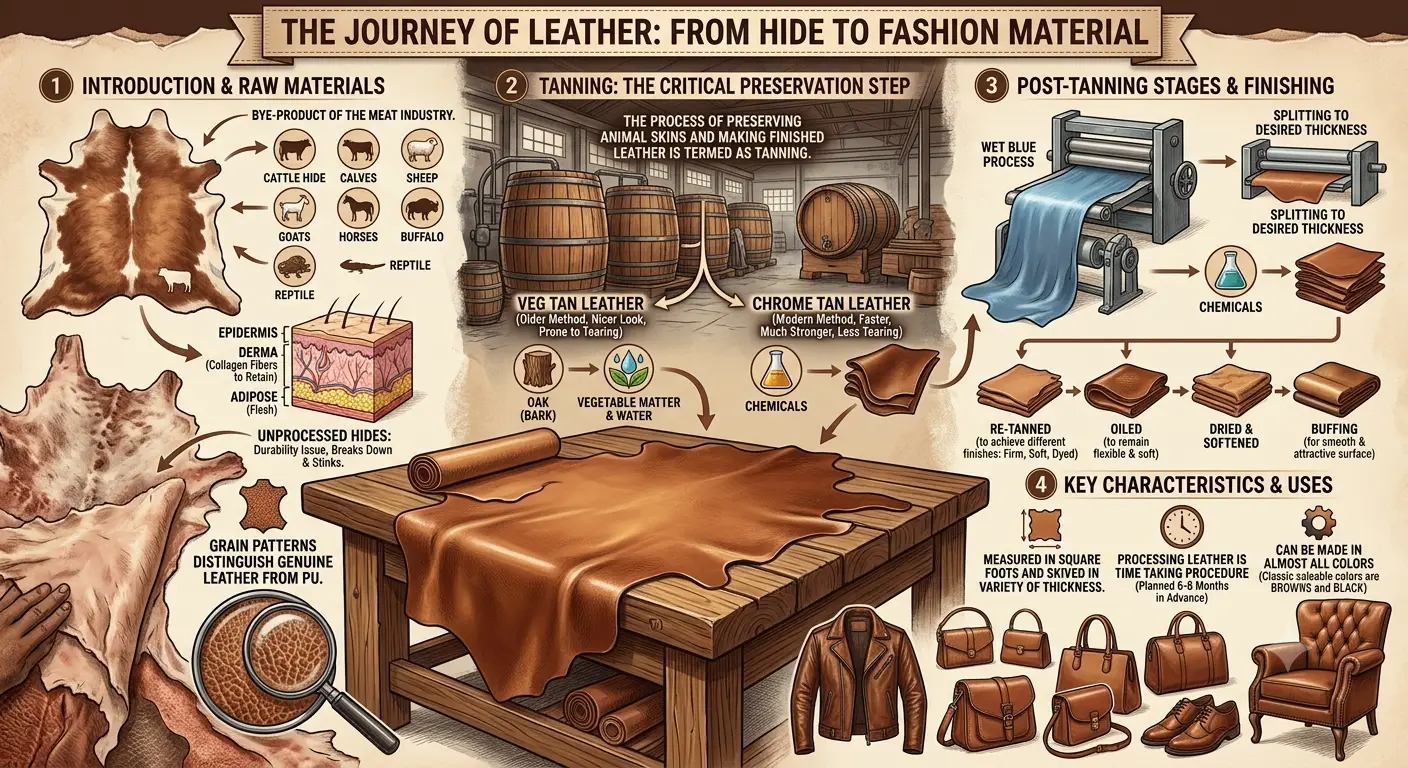
Leather is an important raw materials used in the fashion industry. Many consumers own a variety of leather varying from jackets, purses to shoes. Leather, one of the oldest clothing materials. Leather is the hides and skins preserved by process called tanning. Procedure of making the leather is complicated, right from skin to finished product.The process of preserving animal skins and making finished leather is termed as Tanning. In the tanning process, tannic acids present in the plant matter chemically alter the leather from decomposing. After then, hides and skins are broken down in two stages wet blue process and finishing. These procedures are done in the tanneries, this cannot be done in the small areas, and these procedures need large areas. If these processes are not done on the hides and skins then they will not be durable and rather breakdown and start stinking. There are basically two types of tanning.
Chrome Tan Leather
This is the more modern method of tanning. This is where the skins are tanned in large barrels. Skins that have been chrome tanned are much stronger and less prone to tearing. Basically chemicals are used for chrome tanning.
Veg Tan LeatherThis is the older method of the two. The result of this method is nicer looking leather but is more prone to tearing. Cheaper shoes from India and China are often 100% veg tanned. Oak (bark) and other plants contain natural tannins and when these are used to make leather it is called vegetable dye. Any leather produced with a veg tannic acids bath (made from vegetable matter and water) is called veg dye leather. Hides and skins have three layers beginning with the epidermis, proceeding to the derma, and ending in the adipose, which is also known as flesh. In the derma part collagen fibers are seen. While making the leather these fibers are only retained while everything is exposed outWhen the hides emerge from the wet blue stage, they are split to the desired thickness. Depending on the intended use of the leather, this thickness may vary. After then the leather is re-tanned to come up with different finishes and whether leather needs to be firm, soft, dyed. After that leather is oiled so that it will remain flexible and soft. After that it is dried and softened. Buffing is done for smooth and attractive surface of the leather. Processing leather is time taking procedure. Leather requirements in the industry for the manufacturing are planned in advance of six to eight months.Leathers are given different finishes as per the fashion market requirement. Finishes meant to say top look of the leather which includes feel, touch, thickness types of grain patterns, type of chemical treatment.Leather is distinguished by the grain pattern on them. They can be read clearly in microscopes but can also be seen with naked eyes. These grain patterns mainly distinguish between PU and leather.Most leather hides and skins produced in the SA are the bye products of the meat industry. Therefore their leather demand is what meat is supplied. The dominant leather skin types are cattle hide, calves, sheep, goats, and horses, buffalo hides. In some parts reptile skins are also used for small products.Hides are obtained from ox, buffalo, cattle and horse skins. Leather is measured in square foots and are skived in variety of thickness as per requirement.Now the leathers can be made in almost all the colors. Classic saleable colors are browns and black. Leather is particularly important in the fashion industry, where it is being used in the fashion accessories, leather jackets, leather shoes and leather upholstery.